Suvlux Light
Featured Industrial & Solar Lighting Assemblies
Pioneering precision-engineered structural arrays certified for harsh-environment deployments.
Executive Overview: The Evolution of Public Lighting into IoT Nodes
Modern public lighting is undergoing a paradigm shift. Once treated as a localized municipal cost center, Smart City Lighting Systems are now recognized as the backbone of urban IoT networks. Centered on high-efficiency LED luminaires, these systems integrate environmental sensors, security assets, and communications infrastructure directly into city streets.
As governments commit to aggressive carbon-neutral goals, the demand for modular, scalable, and resilient OEM/ODM partnerships has surged. To realize substantial ROI, municipal buyers and engineering firms must move beyond basic luminous efficiency metrics. Sustainable success requires a deep understanding of edge-computing integration, photobiological safety standards, and robust wireless control topologies.
System Architecture of Next-Gen Smart City Lighting
A resilient smart street lighting framework relies on a multi-tiered architecture that bridges physical hardware, edge device control, and remote monitoring networks.
1. Optical & Physical Luminaire Layer
Features high-performance SMD LED packages, high-heat thermal dissipation enclosures, and custom optical lenses (e.g., Type II, Type III distributions) designed to reduce spillover and skyglow.
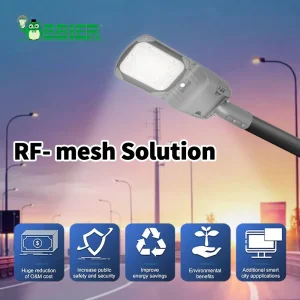
2. Wireless Communication (RF-Mesh / NB-IoT)
Supports modular wireless network architectures utilizing protocols such as NEMA/ZHAGA interfaces, Zigbee, LoRaWAN, and narrow-band cellular infrastructure for continuous status reporting.
3. Central Management Software (CMS)
An enterprise-level dashboard enabling real-time telemetry, automated energy-use calculations, predictive failure tracking, and adaptive scheduled dimming curves.
| Communication Protocol | Optimal Deployment Radius | Bandwidth & Data Volume | Ideal Infrastructure Context |
|---|---|---|---|
| LoRaWAN / RF-Mesh | 10 – 15 km (Sub-GHz) | Low bandwidth, long battery life | Rural highways, highly dense urban grids requiring self-healing capabilities. |
| NB-IoT (Cellular) | Dependent on carrier towers | Medium bandwidth, direct node-to-cloud | Metropolitan cores with pre-existing public cellular infrastructure. |
| PLC (Power Line Carrier) | Physical wire limit | Moderate bandwidth, wired reliability | Heritage zones or tunnels where wireless signals face structural interference. |
Global Strategic Advantage: Partnering with China’s Lighting Supply Chain
Understanding China's competitive advantage in smart lighting manufacturing involves looking beyond low overhead costs. The primary driver is a tightly integrated ecosystem that spans design, raw material sourcing, electronic assembly, and advanced testing.
Vertically Integrated Aluminum Die-Casting & Optics
By sourcing top-tier primary aluminum ingots and keeping die-cast tooling processes in-house, Chinese factories can prototype customized heat sinks within days instead of weeks. Advanced surface treatments—such as electrophoresis and powder coating—protect housings against corrosion, salt spray, and UV damage over long field deployments.
Rapid R&D Prototyping & Smart Controller Design
Smart city lighting relies heavily on driver efficiency and controller performance. With access to leading semiconductor and passive component hubs, Chinese developers quickly integrate the latest LED driver modules with IoT controllers (supporting DALI-2, 0-10V, and wireless options). This agility ensures municipal projects use current, field-tested technologies rather than outdated components.
Jiangsu Suvlux Light Co., Ltd.
A Recognized High-Tech Enterprise Leading Global Smart Infrastructure Production
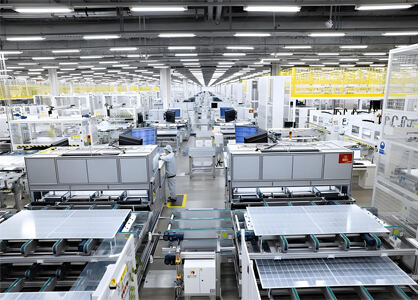
Jiangsu Suvlux Light Co., Ltd. is a high-tech enterprise in China’s lighting industry, specializing in LED outdoor lighting manufacturing and smart lighting solutions. With over a decade of industry experience, the company is dedicated to delivering energy-efficient, environmentally friendly solar and electric lighting systems to customers worldwide. Our products and services have reached more than 200 countries and regions, supporting a wide range of residential, commercial, industrial, and government projects.
Suvlux operates in strict accordance with international quality and safety standards. The company is certified under ISO 9001 and ensures that all products comply with globally recognized certifications such as TUV, CE, FCC, and RoHS. Through rigorous quality control processes and comprehensive testing, we guarantee reliable performance and long-term durability across diverse application environments.
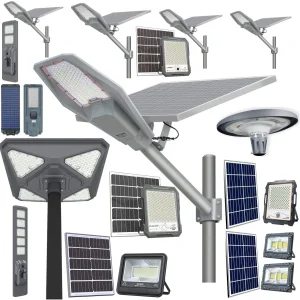
Our product portfolio covers a broad spectrum of outdoor lighting solutions, including integrated and split-type solar street lighting systems, solar-powered flood and garden lighting, as well as high-performance LED fixtures for industrial, roadway, and sports applications, complemented by complete pole and infrastructure support. These solutions are designed to meet varying energy demands while maximizing efficiency and sustainability.
OEM/ODM Customization
We provide full-spectrum engineering capabilities, adapting beam patterns, driver specifications, and IoT controllers to meet local road lighting codes and project requirements.
Rigorous QA Systems
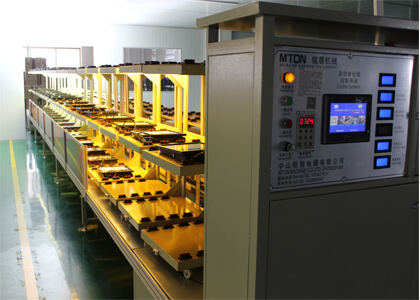
Quality is at the core of everything we do. From raw material selection to production and final inspection, every stage is carefully controlled. All finished products undergo 100% testing to ensure consistent performance, safety, and compliance with international standards.
Reliable After-Sales
We believe that true partnership extends beyond delivery. Suvlux provides comprehensive after-sales support throughout the entire lifecycle of each project. Our team remains committed before, during, and after purchase, ensuring timely assistance and complete customer satisfaction.
Our Corporate Vision
Jiangsu Suvlux Light Co., Ltd. follows a long-term development strategy driven by technological innovation, reliable manufacturing, and quality-focused operations. We are committed to advancing green energy lighting solutions and building lasting partnerships worldwide, contributing to a more sustainable and energy-efficient future.
Macro Industry Solutions: Targeted Architectures for Public Infrastructure
Smart city light poles are valuable real estate for municipal networks. Suvlux collaborates with global system integrators to deliver tailored solutions for diverse environments.
Urban Arterial Roads & Transit Corridors
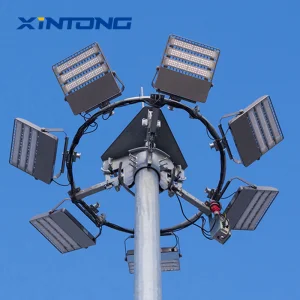
These systems employ high-power, high-mast LED fixtures controlled via NB-IoT networks. Integration with adaptive traffic flow monitoring allows illumination levels to scale dynamically based on traffic speed and vehicle density, lowering municipal energy bills during off-peak hours.
Eco-Conscious Solar & Hybrid Parks
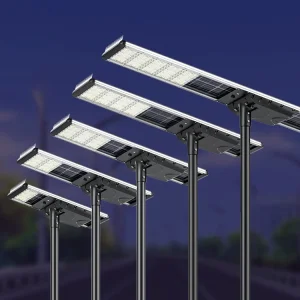
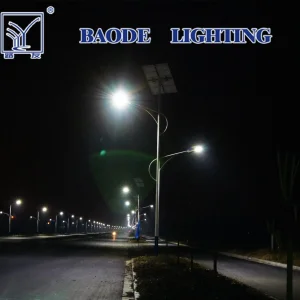
Off-grid and grid-hybrid pathways utilize all-in-one solar street luminaires equipped with integrated MPPT charge controllers and long-lasting LiFePO4 battery storage. System operators manage battery depletion and charge cycles remotely through a centralized cloud dashboard.
Industrial Ports & Large-Scale Sports Complex Yards
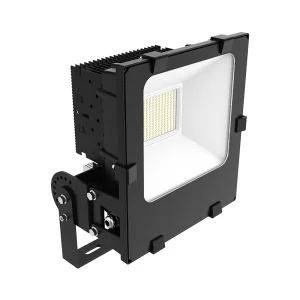
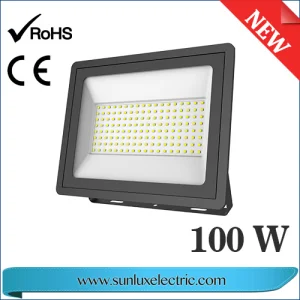
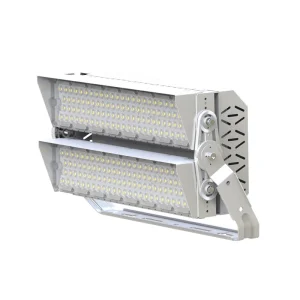
High-output asymmetric floodlights provide glare-controlled illumination across container ports, railway depots, and outdoor arenas. Heavy-duty construction resists high winds and marine environments, reducing maintenance requirements in difficult-to-access locations.
Global Sourcing Best Practices: Compliance & Engineering Specifications
Experienced procurement officers evaluate several key factors when auditing smart lighting suppliers to manage risk and verify product claims:
- Optical & Thermal Testing Logs: Verified LM-79, LM-80, and TM-21 test data projecting luminaire lumen maintenance (typically aiming for L70 or L90 lifetimes exceeding 100,000 operational hours).
- System Interoperability: Verification that wireless nodes conform to open standards (such as the Zhaga Book 18 or NEMA ANSI C136.41 standards) to prevent vendor lock-in.
- Environmental Certifications: Official verification of IP ratings (IP65, IP66, IP67), impact protection ratings (IK08, IK09, IK10), and salt fog exposure tests.
Emerging Trends Shaping the Future of Smart Lighting
As urban infrastructure evolves, smart city systems are incorporating several key industry developments:
5G & Micro-Cell Integration
Smart poles serve as hosting structures for 5G microcell transceivers, resolving street-level connectivity challenges in dense urban environments.
AI-Powered Predictive Maintenance
Centralized software analyzes current and thermal metrics to flag fixture degradation and schedule maintenance before failures occur.
Environmental Edge Sensing
Luminaires equipped with sensors track air quality, particulate matter, noise levels, and localized weather conditions in real time.
V2X Connectivity Support
Streetlights communicate status updates to connected vehicles, improving visibility and safety near pedestrian crossings and intersections.
Technical & Commercial FAQ: Smart City Lighting Systems
High-Mast Infrastructure & Smart Controller Collections
Engineered solutions for major transportation hubs, commercial facilities, and municipal utility grids.