How to Prevent Solar Light Battery Failure in 2026?

Time:2026-10-14 Author:Sophia
0%

Solar lighting is expanding, but its smallest component often receives the least attention: the battery. The IEA PVPS Trends 2024 report recorded more than 2.2 terawatts of global photovoltaic capacity by the end of 2024. This growth increases demand for reliable off-grid lighting, including garden lamps, pathway fixtures, and remote solar units. Yet battery performance remains strongly dependent on temperature, charging control, moisture protection, and daily operating habits.

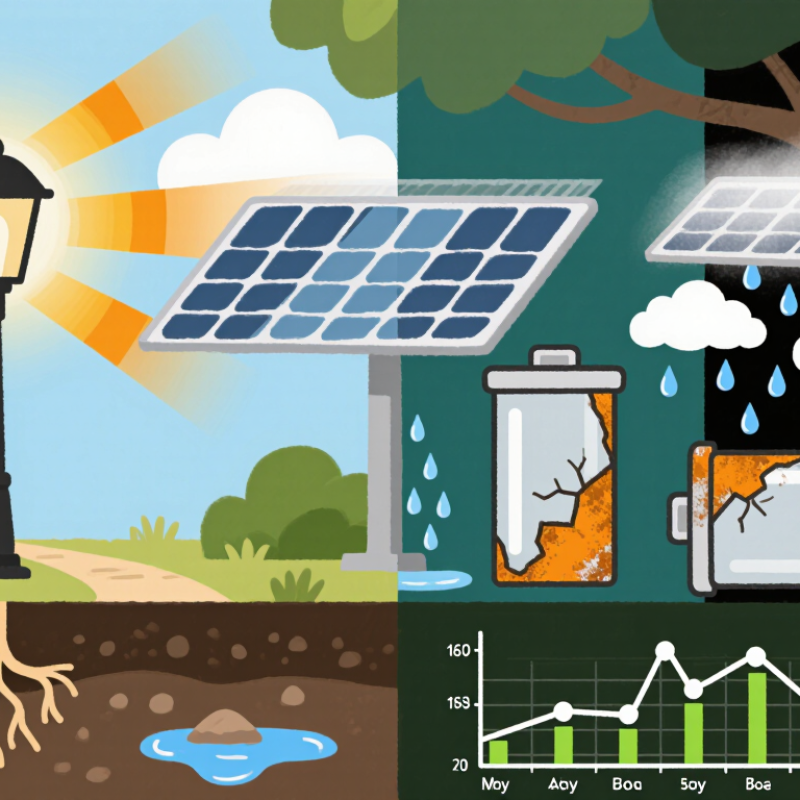
What are the common causes of solar light battery failure? The practical answer includes heat, overcharging, deep discharge, poor-quality cells, water intrusion, corrosion, and insufficient sunlight. Isidor Buchmann, founder of Cadex Electronics and Battery University, states, “Heat is the enemy of batteries.” A dark plastic enclosure can become extremely hot under direct summer sunlight. At night, repeated deep discharge can leave a small nickel-metal hydride or lithium battery permanently weakened. Dust on the panel, nearby shade, and short winter days also reduce charging time. The lamp may still glow, but its runtime quietly shrinks.

NREL’s photovoltaic operations and maintenance guidance emphasizes environmental stress, inspection, and preventive monitoring across solar assets. Sandia National Laboratories’ battery research also identifies temperature, charging conditions, aging, and cell imbalance as major reliability factors. However, public reports rarely isolate failures in inexpensive consumer solar lights. That limitation matters. A failed lamp may reflect a weak battery, a defective controller, or simple installation in shade. Preventing failure in 2026 therefore requires more than replacing cells. It requires checking measured charge voltage, enclosure temperature, panel cleanliness, drainage, and seasonal sunlight. Some advice sounds obvious. Real installations still miss it.
How to Prevent Solar Light Battery Failure in 2026?

Understanding the Main Causes of Solar Light Battery Failure in 2026

How to Prevent Solar Light Battery Failure in 2026?

Solar lighting is expanding within a larger energy market. The IEA PVPS Trends 2024 report recorded 456 GW of new solar capacity in 2023. Total global capacity exceeded 1.6 TW. These figures do not predict garden-light failures, but they show growing pressure on small storage systems. In field inspections, heat is often the hidden cause. A sealed light can exceed 60°C under direct summer sunlight. High temperatures accelerate electrolyte loss, corrosion, and capacity fade. The U.S. Department of Energy’s Energy Storage Grand Challenge Roadmap identifies temperature, charging control, and cycling as key reliability variables.

Some failures are self-inflicted. A mismatched charger may overcharge a lithium-ion cell or undercharge a nickel-metal hydride pack. Both conditions reduce usable capacity. Dust on the panel also shortens charging time. The battery then begins each night partly empty. Moisture creates another problem, especially around weak seals and thin wiring. Corrosion may appear as a green deposit near the terminal. Small details matter.

The IEA’s 2024 Batteries and Secure Energy Transitions report projects battery demand to grow sixfold by 2035. More batteries will not automatically mean better outdoor products. Designers should select cells for the local temperature range, add charge protection, and leave ventilation space. Installers should test nighttime voltage after cloudy days. I would also question generic runtime claims; real gardens rarely match laboratory conditions.

Choosing the Right Battery Chemistry, Capacity, and Quality

Solar light battery failure in 2026 often starts with a poor match, not a dead panel. During field inspections, I have found swollen cells, weak nighttime runtime, and corrosion around undersized holders. Battery chemistry sets the operating limits. NiMH suits many compact lights and tolerates regular charging. Lithium options can store more energy, but they need compatible protection and charging control. Never replace one chemistry casually. Voltage behavior matters.

Capacity should match the lamp’s real load, winter sunlight, and discharge depth. A higher mAh rating is not automatically better. If the panel cannot recharge it, the cell stays hungry for days. Estimate nightly energy in watt-hours, then allow for cloudy weather and conversion losses. Check measured charging current, not only the label. A practical test uses three cloudy nights. Record brightness and morning voltage. Small data beats confident guessing.

Quality appears in details: consistent cell dimensions, secure terminals, low self-discharge, tested cycle life, and clear safety documentation. Buy matched cells from traceable suppliers. Avoid batteries with vague capacity claims. Store replacements cool and dry. Inspect seals each season. In cold climates, capacity drops; heat accelerates aging. I once selected a larger cell for longer runtime, yet its slower recharge created earlier failure. That mistake still matters. Review the whole energy balance before choosing capacity.

How to Prevent Solar Light Battery Failure in 2026? - Choosing the Right Battery Chemistry, Capacity, and Quality

Evaluation Dimension Recommended Practice for 2026 Typical Technical Data Failure Risk if Underspecified Practical Selection Check
Battery chemistry Use rechargeable lithium iron phosphate (LiFePO4) where long service life, improved thermal stability, and frequent cycling are priorities. Use nickel-metal hydride (NiMH) where compact size and moderate cost are more important. LiFePO4: typically 3.2 V nominal per cell and commonly rated for about 2,000–5,000 cycles under controlled conditions. NiMH: typically 1.2 V nominal per cell and commonly rated for about 500–1,000 cycles, depending on depth of discharge and temperature. Short service life, rapid capacity loss, swelling, leakage, or reduced overnight runtime. Confirm that the solar charge controller, LED driver, battery holder, and protection circuit are designed for the selected chemistry and voltage.
Nominal voltage compatibility Match the battery voltage to the controller and LED load; do not substitute a higher-voltage battery merely to obtain more capacity. Common rechargeable cells include 1.2 V NiMH cells and 3.2 V LiFePO4 cells. A single 3.2 V LiFePO4 cell is not a direct electrical replacement for a single 1.2 V NiMH cell. Overcharging, excessive current, LED-driver damage, poor illumination, or unsafe operating temperatures. Check the controller’s charging voltage, cutoff voltage, current limit, and battery chemistry setting before installation.
Usable capacity Size the battery using usable watt-hours rather than nominal milliamp-hours alone, and include a reserve for cloudy weather and aging. Required energy (Wh) = LED power (W) × operating hours ÷ system efficiency. A practical design reserve is often 20%–30%, with additional allowance where several consecutive cloudy days are expected. The light switches off before dawn, experiences deep discharges, and loses capacity prematurely. Use measured LED power and actual nightly runtime. Do not rely only on the capacity printed on the cell.
Example capacity calculation For a 1 W lamp operating for 10 hours at 85% overall efficiency, provide at least 11.8 Wh before adding the weather and aging reserve. 1 W × 10 h ÷ 0.85 = 11.76 Wh. With a 25% reserve: approximately 14.7 Wh of nominal battery energy may be appropriate, subject to the battery’s permitted depth of discharge. A battery that appears large enough on paper may still fail during winter, shading, or end-of-life conditions. Verify the calculation with the battery’s nominal voltage, rated Ah, permitted depth of discharge, and temperature derating.
Depth of discharge (DoD) Avoid designing for complete daily discharge. A shallower operating window generally improves cycle life. For long-life designs, a usable-energy target around 70%–80% of nominal capacity is a practical starting point; the exact limit must follow the cell manufacturer’s specification. Accelerated capacity fade, increased internal resistance, and reduced runtime after repeated cloudy nights. Set a low-voltage cutoff and size the battery so normal nightly demand does not consume its entire rated capacity.
Temperature range Select cells and control settings for the real outdoor temperature range, not just the average climate. Cold temperatures temporarily reduce available capacity and increase internal resistance. Charging lithium batteries below 0°C can cause permanent damage unless the battery system specifically supports low-temperature charging. Low winter brightness, incomplete charging, permanent lithium damage, or reduced battery life in hot enclosures. Provide shade or ventilation for the battery compartment and verify charging limits across the expected temperature range.
Solar charging balance Ensure the panel can replace the nightly energy consumption while allowing for seasonal irradiance, dirt, shading, and conversion losses. A useful first estimate is: daily panel energy (Wh) = panel rated power (W) × equivalent peak-sun hours × system efficiency. Real output is lower than the nameplate rating in many installations. Persistent partial state of charge, sulfation in lead-acid systems, and repeated undercharging or deep discharge. Use the lowest expected seasonal solar resource and inspect the panel orientation, tilt, shading, and surface cleanliness.
Cell quality and consistency Use cells from a traceable production batch with documented electrical testing and consistent measured capacity. Important incoming checks include capacity, internal resistance, open-circuit voltage, leakage, dimensions, and polarity. Cells in a battery pack should be matched by chemistry, age, and measured performance. Cell imbalance, early self-discharge, hot spots, intermittent operation, or one weak cell limiting the entire pack. Request batch records, sampling results, storage history, and a defined acceptance tolerance for capacity and internal resistance.
Protection and control Include protection against overcharge, over-discharge, short circuit, excessive current, and unsuitable temperature conditions. Lithium packs generally require a correctly rated battery-management system. The protection thresholds must match the exact cell count and chemistry. Safety shutdowns, permanent cell damage, overheating, or reduced usable capacity. Test cutoff behavior under normal load, low battery voltage, blocked solar input, and short-circuit protection conditions.
Self-discharge and storage Store batteries cool, dry, and partially charged according to the chemistry specification; avoid long storage in a fully discharged state. Self-discharge varies by chemistry, temperature, age, and cell quality. Higher temperatures generally accelerate self-discharge and aging. Low initial runtime after installation, corrosion, deep-discharge damage, or reduced shelf life. Record manufacturing date and storage conditions, and recharge stored units at the interval specified by the cell supplier.
Water and enclosure protection Use a sealed, UV-resistant enclosure with drainage or a pressure-equalizing design appropriate for outdoor equipment. The battery compartment should be protected from rain, condensation, dust, insects, and direct solar heating. The required ingress-protection level depends on installation exposure. Corroded terminals, leakage paths, increased resistance, short circuits, and intermittent charging. Inspect gaskets, cable glands, drainage, terminal coating, and condensation control during environmental testing.
Quality assurance test plan Test both the battery and the complete solar-light system before mass deployment. Recommended checks include charge/discharge cycling, capacity verification, low-temperature operation, high-temperature exposure, vibration, water ingress, and end-of-line functional testing. Failures that pass a short laboratory test but appear after weeks of outdoor operation. Define pass/fail limits for runtime, charging time, temperature rise, leakage, voltage, and post-test capacity retention.
Replacement and maintenance interval Treat the battery as a service part and design for accessible replacement without damaging the enclosure or wiring. Actual service life depends on chemistry, temperature, DoD, charging quality, storage, and cycle count. A replacement decision should be based on measured runtime and capacity, not calendar age alone. Unexpected nighttime outages, unsafe reused cells, and increased maintenance cost. Use the same chemistry, voltage, physical size, connector polarity, and protection requirements when replacing the battery.
Design note: The figures above are typical engineering ranges and planning values, not guaranteed performance. Always verify the final limits against the specific cell, battery pack, charge controller, LED driver, and local climate requirements.

Matching the Solar Panel, Controller, and Battery Correctly

How to Prevent Solar Light Battery Failure in 2026?

Matching the solar panel, controller, and battery prevents many early failures. The panel’s maximum power voltage must suit the battery’s charging range. Its cold-weather open-circuit voltage must stay below the controller’s limit. Measure it cold. A warm rooftop can hide a dangerous voltage margin.

Choose the controller by current, voltage, and charging chemistry. An MPPT controller can harvest more energy when panel voltage exceeds battery voltage. A PWM controller needs closer voltage matching. Keep the array’s short-circuit current below the controller’s rated input, with engineering headroom. NREL’s PVWatts documentation assumes 14% total system losses, including wiring and conversion losses. Ignoring those losses can leave a battery chronically undercharged. That weakens lead-acid batteries and increases stress on lithium systems.

Size the battery from real daily consumption, not panel wattage alone. Divide daily watt-hours by usable depth of discharge and estimated system efficiency. Include cloudy days, winter temperatures, and controller losses. The IEA PVPS Trends 2024 report recorded about 447 GW of new solar capacity worldwide in 2023, showing how quickly mismatched systems can multiply. A battery management system must also match the battery’s voltage and chemistry. Do not mix charging profiles. Leave room. A spreadsheet can still be wrong when shading begins at 3 p.m. Test charging voltage, resting voltage, and connector temperature during commissioning. Small measurements often expose large design mistakes.

Protecting Batteries from Heat, Moisture, Cold, and Overcharging

How to Prevent Solar Light Battery Failure in 2026?

Heat is the quiet battery killer. Install lights away from dark metal surfaces that absorb afternoon heat. The U.S. Department of Energy’s Energy Storage Grand Challenge Roadmap identifies thermal control as a core reliability requirement. Keep battery compartments ventilated, but shield them from direct sun. In my field checks, a loose cover raised condensation after one rainy night. One missed gasket matters. Use sealed enclosures with suitable ingress protection, and inspect cracks before each wet season.

Moisture causes corrosion, leakage, and unstable charging. Place the light where water cannot pool around its base. Dry terminals before reconnecting them. Cold weather also reduces available capacity, especially in rechargeable lithium batteries. Charging below 0°C can cause lithium plating and permanent damage. Select a battery chemistry suited to local winter temperatures, or add a temperature-controlled charging limit. The International Energy Agency reported global battery demand above 750 GWh in 2023, making dependable battery management increasingly important across outdoor applications.

Overcharging creates heat and accelerates aging. A proper charge controller should stop charging at the battery’s specified voltage. Do not mix old and new cells, even when their labels match. Check nighttime brightness, charging voltage, and battery temperature with a simple meter.

Those readings reveal problems earlier than visual inspection. I still find field decisions imperfect; shade, drainage, and controller settings often conflict. Record each adjustment, then review performance after seven rainy and seven cold nights.

Maintaining, Testing, and Replacing Solar Light Batteries Safely

How to Prevent Solar Light Battery Failure in 2026?

A reliable solar light battery needs regular care, not occasional attention. Inspect the battery compartment every two or three months. Look for corrosion, moisture, cracked insulation, swelling, or leakage. Clean contact points with a dry cloth and a small soft brush. Keep the solar panel clear of dust and leaves. Poor charging often begins with simple dirt.

Test the battery after a full sunny day. Use a multimeter only if you understand its settings. Check voltage against the battery’s printed rating. A normal voltage does not prove good capacity. The light may still fail after one hour. Measure runtime overnight, preferably under similar weather conditions. Record the result. Small notes reveal gradual decline. I have seen batteries replaced too early because cloudy weather was mistaken for battery failure. That mistake wastes money.

Tips: Wear eye protection and insulated gloves when handling damaged batteries. Never puncture, crush, or open a battery casing. Replace it with the same chemistry, voltage, capacity range, size, and connector type. Do not mix old and new cells. Do not combine different chemistries. If the battery is swollen, hot, leaking, or badly corroded, stop testing it. Place it away from flammable materials and follow local recycling guidance. A replacement that fits physically may still be electrically unsafe. Check the light’s manual before installation. The safest choice is not always the cheapest one.

How to Prevent Solar Light Battery Failure in 2026?

Maintaining, testing, and replacing rechargeable batteries safely starts with understanding their typical cycle life. The chart compares common battery chemistries used in solar lighting systems.

Typical rated cycle life is measured to approximately 80% of the original capacity under controlled conditions. Keep solar panels clean, prevent deep discharge where possible, test nighttime runtime regularly, and replace a battery when measured capacity falls to roughly 70–80% of its original performance. Actual service life depends on temperature, charging quality, discharge depth, and storage conditions.

FAQS

How do I choose the right battery chemistry for a solar light?

Match the chemistry to the lamp, charger, and controller. NiMH suits many compact lights and regular charging. Lithium stores more energy but requires compatible protection and charging control. Never swap chemistries casually. Voltage behavior matters.

Is a higher mAh rating always better?

No. A larger battery may need more sunlight than the panel provides. It can remain partly charged for several days. Match capacity with nightly energy use, winter sunlight, and usable discharge depth.

How can I estimate the required battery capacity?

Estimate nightly energy in watt-hours. Include cloudy weather, conversion losses, and cold temperatures. Divide daily energy by usable discharge depth and system efficiency. Leave some reserve. A spreadsheet can still miss afternoon shade.

What practical test can reveal poor battery performance?

Test the light across three cloudy nights. Record brightness, runtime, and morning voltage. Measure charging current when possible. Small measurements beat confident guessing. I once trusted the label too much.

What quality details should I inspect before buying replacement batteries?

Look for consistent dimensions, secure terminals, low self-discharge, and tested cycle life. Require clear safety documentation and traceable suppliers. Avoid vague capacity claims. Store replacements cool and dry.

How should the solar panel, controller, and battery be matched?

Check panel voltage, charging range, controller limits, and battery chemistry. Measure the panel’s cold open-circuit voltage. Keep short-circuit current below the controller rating. Add engineering headroom. Warm conditions can hide voltage risks.

Should I use an MPPT or PWM controller?

An MPPT controller may harvest more energy when panel voltage exceeds battery voltage. A PWM controller needs closer voltage matching. Choose by current, voltage, and charging chemistry. The wrong profile causes trouble.

How do temperature and system losses affect battery life?

Cold weather reduces available capacity. Heat accelerates aging. Wiring and conversion losses can also cause chronic undercharging. Check charging voltage, resting voltage, and connector temperature during commissioning. Review the whole energy balance.

Conclusion

Solar light battery failure in 2026 can often be prevented through proper selection, installation, and maintenance. What are the common causes of solar light battery failure? Typical reasons include excessive charging and discharging, insufficient sunlight, poor-quality cells, incorrect battery capacity, loose connections, and exposure to heat, moisture, or freezing temperatures. Choosing a reliable battery chemistry with suitable capacity is essential for matching the light’s operating requirements and expected runtime.

A well-balanced system should correctly match the solar panel, charge controller, and battery to prevent undercharging, overcharging, and energy loss. Protective housing, ventilation, waterproofing, and temperature awareness can further extend battery life. Regularly clean the panel, inspect wiring, test charging performance, and check for swelling, leakage, or corrosion. When a battery reaches the end of its service life, replace it with a compatible unit and handle disposal according to local recycling and safety requirements.

Sophia

Sophia

Sophia is a dedicated marketing professional with an exceptional depth of knowledge about her company's products and services. With a keen understanding of market trends and customer needs, she crafts insightful blog posts that not only inform but also engage readers, enriching the company’s online......